Thursday, July 12, 2018

The Morning Call---Who's on first


The Morning Call

7/12/18

The Market
         
    Technical

The Averages (DJIA 24700, S&P 2774) were down yesterday, though volume remained flat.  Breadth weakened.   The Dow continued to trade above its 100 day moving average (reverting to support), above its 200 day moving average (reverting to support) and within a short term trading range.  The S&P ended above both moving averages, in uptrends across all timeframes but retreated from the minor resistance from its June high.
               
 VIX rose 7 ¾ %, but still closed below its 100 day moving average (now resistance), below its 200 day moving average (reverting to support) and within a short term trading range.  So it bounced even before mounting a challenge of the May/June double bottom; suggesting that stocks may have to labor for any further short term advances.

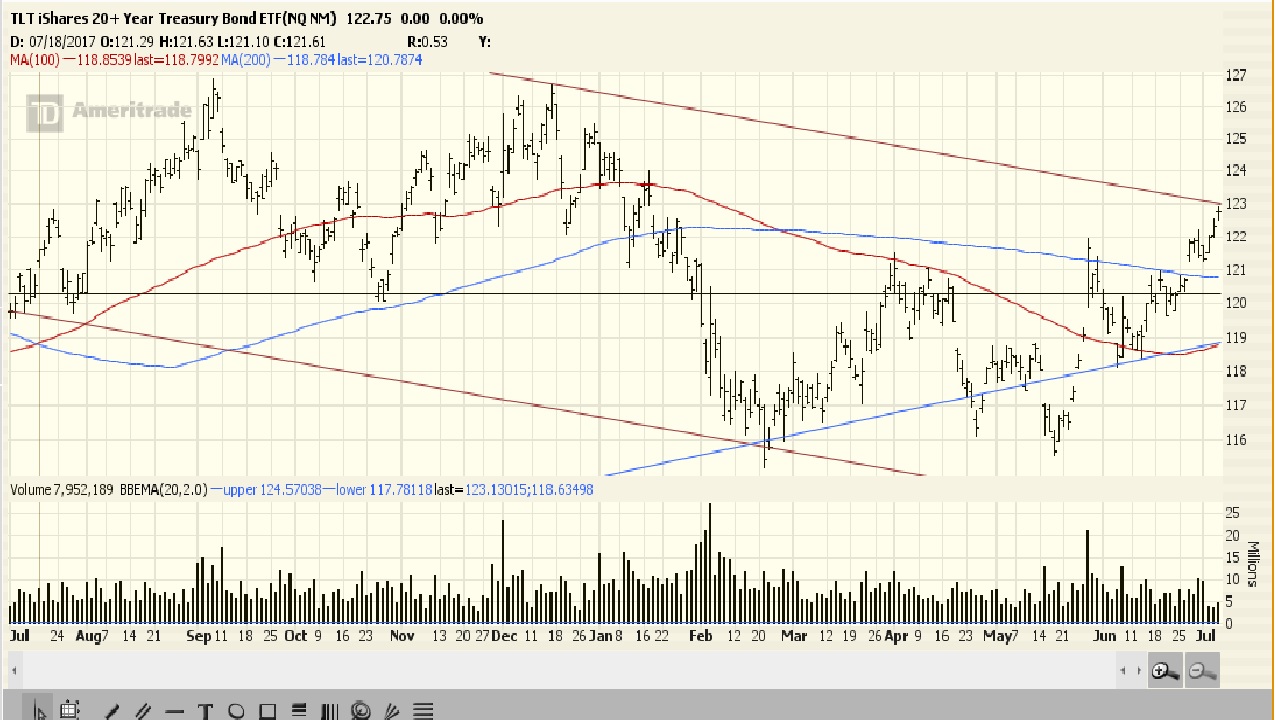
The long Treasury advanced ½ %, remaining well above its 100 and 200 day moving averages and in a long term uptrend. 

            The dollar was also up ½ %, staying above both moving averages and in a short term uptrend.

            Gold returned to its old ways, falling 1% and continued to trade below both moving averages and in a short term downtrend.

            Bottom line: despite being a lousy day, the DJIA remained above both its recently successfully challenged moving average (a positive), bringing those momentum indicators in harmony with those of the S&P (also a plus).   TLT, UUP and GLD continue to perform like investors are betting on a relatively positive US economy versus the rest of the world’s economy.   The only problem, in my opinion, is that doing less poorly than the rest of the world is not a reason for stocks to advance when they are already near historic high valuations.
           
    Fundamental

       Headlines

            Yesterday’s economic releases were mostly upbeat: weekly mortgage/purchase applications and May wholesale inventories/sales were better than anticipated.  June PPI was a tad hotter than expected which isn’t good news if you are worried about Fed staying hawkish.

Speaking of which and wish I wasn’t, the Fed is once again intent on ignoring the data and constructing its own reality in order to forward policies that it thinks best for the economy.  The latest example is the construction of a hypothetical yield curve (to replace the real yield curve) to justify a continuing tightening of monetary policy.  To be sure, I love it since I believe that the gross misallocation and mispricing of assets created by QEInfinity has to be corrected as a precondition for the capital markets return to efficiency.  For that to occur, the Fed has to be equally oblivious to economic reality in unwinding QE as it was when was implementing it.  But that involves Market pain---which means this is not a widely held view.   (medium and a must read):

            ***overnight, the minutes from the latest ECB meeting show that plans for unwinding QE are on track---as long as nothing untoward occurs (medium):

            But the Fed was not the lead headline of the day.  Trade returned to center stage as Trump upped the tariff ante with China.  Prior to this announcement, the magnitude of the threatened tariffs were relatively small.  Now we are talking serious money.  But it will take some time before the tariffs are implemented; so there is still time for negotiations.  That said, no one seems to talking about the Chinese theft of US intellectual property which, for me, is their primary transgression.  This has been going on for far too long and, as a point of fairness, the US needs to stop it.  So I have no issue with Trump playing hard ball.  What would be a major disappointment to me (and would, in my opinion, have a much less important impact of future US secular growth) is if somehow an agreement is reached solely on tariff levels and not include a solution to this problem.

Trump and China trade (medium):

            ***overnight, China toned down trade rhetoric; traders get jiggy.

            Trade was also a part of present negotiations taking place with our NATO allies.  There is more issues involved than trade; most importantly, NATO nations not contributing their fair share of its defense expenses.  To be sure, they are related.  The good news is that, as of last night, the rhetoric at the current conference is a lot less confrontation than with China.

            ***overnight, Trump says NATO allies agreed to up defense spending (medium):

            But Macron/Merkel say no (medium):

            What Trump should say is that the US is spending less (medium0:

            Stockman slams Trump trade strategy (medium):

            This is a great discussion on tariffs and how they do and don’t affect an economy.  It is a bit long; and even though the prose are not pedantic, I had to re-read some portions several times to understand.
           
Bottom line:  investors appear to continue to believe that (1) the Fed will tighten only so long it isn’t disruptive to the Market, and (2) any trade repercussions will be minimal.  The difference in the two is that the trade more directly impacts the economy while under the Fed policy regime established by Greenspan, the Fed more directly impacts security prices.  And security prices are more directly related to my investment goals than the economy.  In short, watching the Fed monetary policy has been, is and will be the big kahuna when it comes investment strategy; and its Alice in Wonderland strategy, in my opinion, will not end well.  At current valuations, be sure you own some cash.
           
            Corporate stock buybacks are a losing proposition for companies (medium and a must read):


    News on Stocks in Our Portfolios


Economics

   This Week’s Data

      US

            May wholesale inventories rose 0.6% versus expectations of up 0.5%; sales were up a whopping 2.5%.

            June CPI rose 0.1% versus estimates of up 0.2%; ex food and energy, it was up 0.2%, in line.

            Weekly jobless claims fell 18,000 versus forecasts of down 6,000.

     International

    Other

            Facts on unemployment (medium and a must read):

            The Market and the Fed (short):

            Iran sanctions are different this time (medium):


What I am reading today

            More on the future of social security (medium):

Visit Investing for Survival’s website (http://investingforsurvival.com/home) to learn more about our Investment Strategy, Prices Disciplines and Subscriber Service.


Wednesday, July 11, 2018

The Morning Call---Trump gives Investors nonchalance on trade a test


The Morning Call

7/11/18

The Market
         
    Technical

The Averages (DJIA 24919, S&P 2793) had another good up day.  While volume was flat, breadth improved.   The Dow finished above its 100 day moving average for a second day (now resistance; if it remains there through the close today, it will revert to support), above its 200 day moving average for a third day (now resistance; if it remains there through the close today, it will revert to support) and within a short term trading range.  The S&P ended above both moving averages and in uptrends across all timeframes.  The assumption is that prices are going higher, though the S&P is now facing minor resistance from its June high.

 VIX fell ½ %, closing below its 100 day moving average (now resistance), below its 200 day moving average for a third day (now support; if it remains there through the close today, it will revert to resistance) and within a short term trading range.  It is nearing the May/June double bottom; suggesting that stocks may have to labor for any further short term advances.

The long Treasury was down a penny, but remains well above its 100 and 200 day moving averages and is in a long term uptrend. 

            The Japanese yield curve is flattening dramatically (medium):

            The dollar was again up fractionally, remaining well above both moving averages and in a short term uptrend.

            Gold was up another ¼%, but its pin action still looks like nothing more than a dead cat bounce.  It is still below both moving averages and in a short term downtrend.

            Bottom line: the DJIA’s pin action continues to improve bringing it ever closer to harmonizing with the S&P---a plus sign for future stock movement.   I found another analyst that agrees with the thought that the confusing performances of TLT, UUP and GLD is likely the result of investors betting on a relatively positive US economy versus the rest of the world’s economy.

However, if true (global economic activity is slowing and could deteriorate even further if a trade war breaks out), I don’t still don’t want to be fully invested in the equities in a relatively upbeat economy when their prices are already a short hair off their all-time highs.   In other words, if you don’t own some cash, this is probably a good time to do so.

            Yesterday in the charts (short):

                        Stock buybacks hit record highs in first half (medium):

    Fundamental

       Headlines

            Yesterday’s US economic releases were upbeat: the June small business optimism index and month to date retail chain store sales were better than expected.  Overseas, not so much: July German economic sentiment was disappointing and June Chinese PPI was hotter than anticipated.

            With a lot of attention on Wimbledon, the Soccer Playoffs, the new Supreme Court nominee and Trump’s trip to Europe and the absence of any big economically related headlines, there is not much on which to comment (though the confirmation of a pro-business judge would be a long term plus for the economy).  Investors’ concern about a trade war seems to be on the backburner for the moment and appear to be anticipating a good second quarter earnings season.

            ***overnight, Trump imposed tariffs on an additional $200 billion of Chinese goods.   Remember that this is not immediate, the US will have to go through a number of procedures before they take effect.

Bottom line:  the technical factors continue to point to further price increases even though those prices are near historic high valuations.  In that circumstance, I think it makes sense to take some money off the table.  As you know, I have already done so.  Importantly, not because I think that the indices suggest equity overvaluation (even though they do) but because individual stocks within our portfolios have traded into the Sell Half Ranges established a Model that produces valuations based on very long term financial history of the underlying companies and historical valuation measures.  Even then, my discipline is to only Sell Half of an overvalued position.  Still, I don’t think it prudent to hope for the best when stock prices are already at highs.


    News on Stocks in Our Portfolios
 
The Procter & Gamble Company (NYSE:PG) declares $0.7172/share quarterly dividend, in line with previous.

Cummins (NYSE:CMI) declares $1.14/share quarterly dividend, 5.6% increase from prior dividend of $1.08.

Economics

   This Week’s Data

      US

            Month to date retail chain store sales grew faster than in the prior week.

            Weekly mortgage applications rose 2.5% while purchase applications were up 7.0%.

            June PPI came in at +0.3% versus estimates of +0.2%: ex food and energy, it was +0.3%, in line.

     International

    Other

            A chorus of Trump/trade critics (medium):

            The June dividend report (short):

            Fiscal policy in good and bad times (medium and a must read):

            BLS job opening report (short):

The latest data on oil supply/demand (medium):

What I am reading today

            Nine essential elements for committing massive fraud (long):

            Mexico’s new president wants to build a wall against illegal immigration (medium):
           

Visit Investing for Survival’s website (http://investingforsurvival.com/home) to learn more about our Investment Strategy, Prices Disciplines and Subscriber Service.


Tuesday, July 10, 2018

The Morning Call--What trade war?


The Morning Call

7/10/18

The Market
         
    Technical

The Averages (DJIA 24776, S&P 2784) had another strong up day, though some of the surge was short covering as trade war fears faded.  Volume was up only modestly, ditto breadth.   The Dow finished above its 100 day moving average (now resistance; if it remains there through the close on Wednesday, it will revert to support), above its 200 day moving average for a second day (now resistance; if it remains there through the close on Wednesday, it will revert to support) and within a short term trading range.  The S&P ended above both moving averages and in uptrends across all timeframes.  The assumption is that prices are going higher.

 VIX fell another 5 %, closing below its 100 day moving average (now resistance), below its 200 day moving average for a second day (now support; if it remains there through the close on Wednesday, it will revert to resistance) and within a short term trading range.  It is nearing the May/June double bottom; suggesting that stocks may have to labor for any further short term advances.

The long Treasury was off ½%, falling away from its challenge of the upper boundary of its short term downtrend (I know I said uptrend yesterday.  Sorry for the confusion) but remains well above its 100 and 200 day moving averages and is in a long term uptrend. 

            The dollar recovered fractionally, remaining well above both moving averages and in a short term uptrend. It continues to perform somewhat at odds with the long bond.

            Gold was up another ¼%, but its pin action still looks like nothing more than a dead cat bounce.  It is still below both moving averages and in a short term downtrend.

            Bottom line: the DJIA’s pin action continues to improve bringing ever closer to harmonizing with the S&P---a plus sign for future stock movement.   I believe that I have figured out what has been for me the confusing performances of TLT, UUP and GLD.  This all makes sense if investors are betting on a relatively positive US economy (relatively is the operative word) versus the rest of the world’s economy.  However, if true (global economic activity is slowing and could deteriorate even further if a trade war breaks out), I don’t still don’t want to be fully invested in the equities in a relatively upbeat economy when their prices are already a short hair off their all-time highs.   In other words, if you don’t own some cash, this is probably a good time to do so.


    Fundamental

       Headlines

            One economic release yesterday: May consumer credit soared higher.
      
            While there wasn’t a lot of trade news yesterday, there does seem to be a growing consensus that Trump/US is going to win any confrontation, resulting a big plus for the economy.  As you know, I have been hopeful for such an outcome and, if it occurs, am convinced that it will have a positive impact on US long term secular economic growth.

            A Reagan moment for international trade (medium):

                How ugly could a trade war get? (medium):
               
Bottom line: ‘investors seem to have regained their happy feet based on the assumptions of a new improved secular economic growth rate, a satisfactory outcome to the trade talks and a Fed that will not spoil the party.  And they may be correct.’  However, they appear unconcerned about the growing, already stratospheric, level of debt in the US/globe.  The latest consumer credit report amplifies that point.  This debt simply pulls demand forward and then slows it as the debt is paid off.  I am unsure just how much of a negative offset this is to the positives generated by deregulation and possibly a fairer trade regime.  But as I noted above, I don’t think it prudent to hope for the best when stock prices are already at highs.

    News on Stocks in Our Portfolios

PepsiCo (NYSE:PEP): Q2 EPS of $1.61 beats by $0.09.
Revenue of $16.09B (+2.4% Y/Y) beats by $50M.


Economics

   This Week’s Data

      US

            Consumer credits in May advanced $24.6 billion versus expectations of $12.4 billion.

            The July small business optimism index was reported at 107.2 versus estimates of 106.3.

     International

            July German economic sentiment came in at -24.7 versus forecasts of -19.0.

            June Chinese CPI was up Y/Y 1.9%, in line; PPI was up Y/Y 4.7% versus its May reading of 4.1%.

    Other

            More on corporate profits from my optimist (medium):

            This article discusses the impact, or lack thereof, of QE.  However, the only effect the author is measuring is on interest rates movement (medium):

            US heavy truck sales rise (short):

            Oil prices may be heading higher (medium):

            Inflation according to the NY and Atlanta Feds (medium):

What I am reading today

            Lessons from poker players (medium):
           
            Lessons from Cliff Arness (medium):

A progressive’s view on illegal immigrants (medium):

            Investing 50 years ago (short):

            More on the pension crisis (medium):

Visit Investing for Survival’s website (http://investingforsurvival.com/home) to learn more about our Investment Strategy, Prices Disciplines and Subscriber Service.


Monday, July 9, 2018

Monday Morning Chartology


The Morning Call

7/9/18

The Market
         
    Technical

            The S&P moved higher last week, rallying hard on Friday---the ostensive reason being the better than expected nonfarm payrolls report on top of a very good week for economic releases.  In light of the headlines, it would also seem that trade is fading as a Market concern.  I don’t think that the pin action of a couple of days or a week necessarily means a lot in the grand scheme of things.  But the S&P has been in a rising trend since April; and that is stronger sign that stock prices are going to continue to the upside.


            The long bond smoked’em last week (other areas of the fixed income complex also did well) and is now on the verge of challenging the upper boundary of its short term uptrend.  If it did that, there is some resistance five points higher; and if that is overcome, then it would be solidly above its moving averages and in uptrends across all timeframes.  If not, then it would remained trapped between the upper boundary of its short term downtrend and the lower boundary of its long term uptrend.  This pin action is certainly not indicative of a strong economy (the weak rise in wages contained in the nonfarm payroll numbers seems to have lessened investor fears about inflation), though it could be one of a safety trade.


            The dollar showed some weakness last week, but on relatively poor volume.  While negating its very short term uptrend, it remains well above its 100 and 200 day moving average and the lower boundary of its short term uptrend.  This lousy price movement suggests that investors were ignoring it both as an indication of stronger economy or as concern over trade.  A bit confusing for me. (again the poor wage stat seems to be the reason)


            Gold continues its dismal performance, certainly not acting as a safety trade. (plus it should be rising if the dollar is weakening)


            After a failed attempt at challenging the upper boundary of its short term trading range, the VIX has now dropped back below its 100 day moving average (now resistance), its 200 day moving average (now support; if it remains there through the close on Wednesday, it will revert to resistance) and now appears ready to make a run at the lower boundary of its short term trading range.  That suggests that stocks (1) could be nearing a temporary high [if the VIX can’t push through that lower boundary] or (2) are about to challenge their all-time highs [if the VIX successfully challenges its short term trading range].


    Fundamental

       Headlines

            The dataflow over the last two weeks were in sharp contrast. The week of 6/25, the numbers were abysmal while last week they were equally positive.  Score: in the last 143 weeks, forty-nine were positive, sixty-seven negative and twenty-seven neutral.

            Overall the stats continue to point to an economy that is growing but not at a pace much better than that of the last couple of years.  To be sure, the second quarter growth will be higher than the first; but there is not enough consistency in the data to suggest that economic growth is about to shift to some permanently higher plane.  On the other hand, last week’s plethora of upbeat numbers apparently got investors anticipating a great second quarter earnings report season---which is now upon us. (Note: the earnings reports discussed in the article below are those that companies report to the public, not what they report for tax purposes which is the numbers I use in discussing corporate profits)

That said, the noises out of the Fed seem to be that it is buying the accelerating growth thesis and remains on track towards higher interest rates and unwinding its balance sheet---about which the Market appears unconcerned.

Meanwhile, Trump continues to do what he does best, which is rattle everybody’s cages.  As you know, I have been positive on the economic impact of his efforts towards deregulation and downsizing of the government---and, as a result, I upped my forecast for the US’s long term secular economic growth rate.  In addition, I am hopeful that a new international trading regime will emerge that is fairer to the US.  That also should have a beneficial influence on our growth rate.  But ‘should’ is the operative word; and until there is some clarity on this issue that remains just a hope.

On the other hand, our current fiscal policy is, in my opinion, a huge negative.  When an economy is growing, the government should be shrinking its deficit so that it has firepower when the economy needs stimulating.  We are doing the opposite---running ever higher deficits when the economy appears to have reached full capacity (remember, full capacity in 2018 is not at the same level as in the past).  That huge debt (1) restricts our ability to grow because it demands so much of our resources just to service the debt [versus investment and higher wages], (2) will become an even greater burden if interest rates go anywhere near the historical mean, and (3) as I suggested above, will hinder the government’s ability to soften the effects of the next economic downturn.

Bottom line: investors seem to have regained their happy feet based on the assumptions of a new improved secular economic growth rate, a satisfactory outcome to the trade talks and a Fed that will not spoil the party.  And they may be correct.  My problem is that is all reflected in current prices.  So why do I want to bet money when all the good news is priced in?  In fact, I might want to be a bit prudent and take some money off the table.  Sooner or later, the bears come home and Goldilocks has to beat feet.

            Here is a great counter argument to my concerns about corporate spending and the level of overall debt in the US (medium):

    News on Stocks in Our Portfolios


Economics

   This Week’s Data

      US

     International

    Other

            The big four economic indicators.

What I am reading today

            NATO is obsolete (medium):


Visit Investing for Survival’s website (http://investingforsurvival.com/home) to learn more about our Investment Strategy, Prices Disciplines and Subscriber Service.